Taxes included.
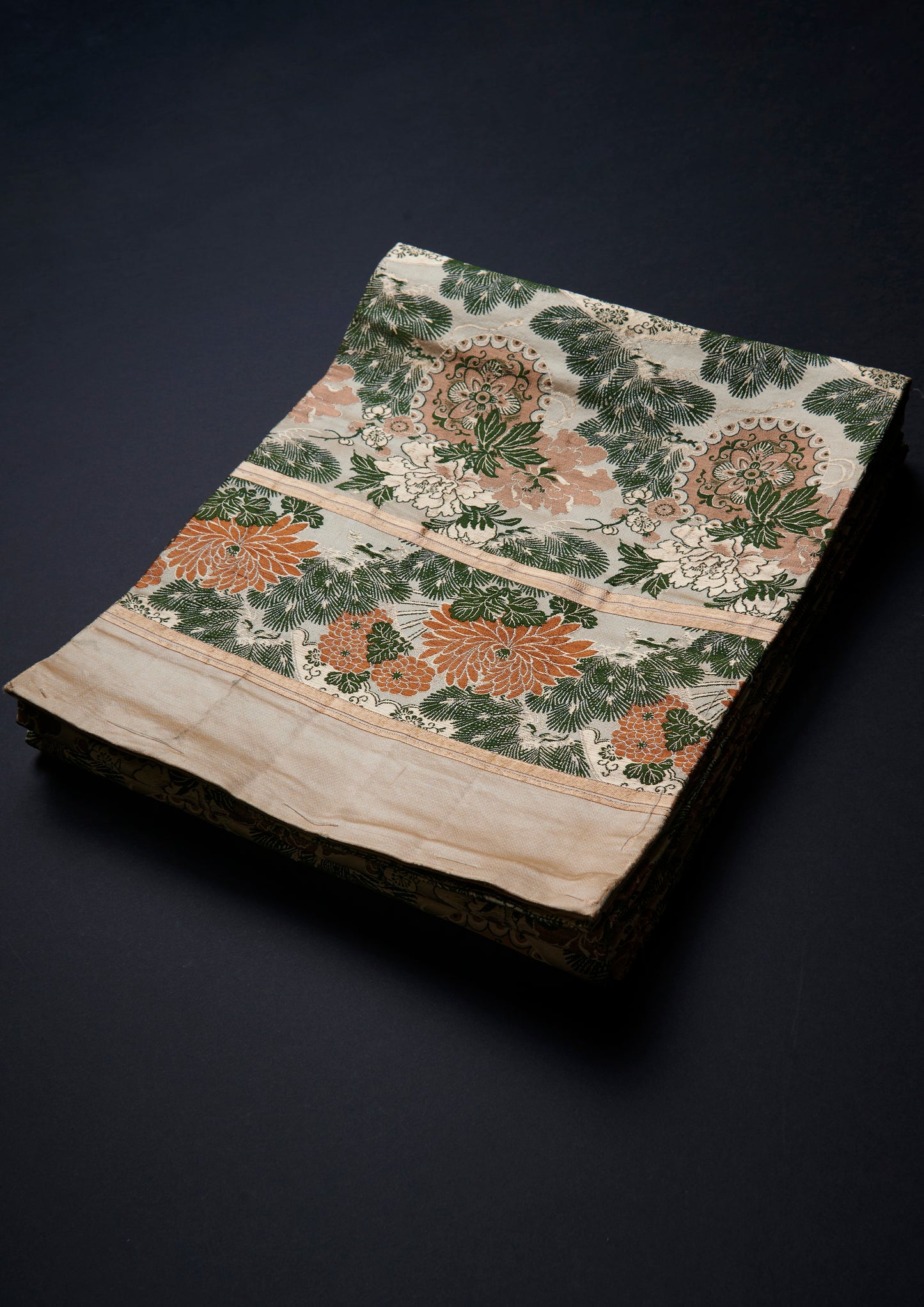
Vintage Obi Belts from the Early Showa Era
Obi belts have long been a key part of Japanese traditional dress, evolving over time in both style and meaning. By the early Showa period (1926–1940s), they had become not just functional pieces, but beautiful expressions of art and individuality.
At Kumano.is, we’re proud to share a small collection of vintage obi from this era—each one offering a glimpse into Japan’s rich textile culture.
Maru Obi
The maru obi was the most formal type, often worn for special ceremonies. With patterns on both sides, it looked elegant no matter how it was tied. While its weight made it less practical over time, today it's treasured as a rare and meaningful piece.
Fukuro Obi
Introduced as a lighter, easier-to-wear alternative, the fukuro obi became popular in the early Showa years. Suitable for both formal and semi-formal occasions, it reflected the era’s shift toward more modern, flexible lifestyles.
Colors & Patterns
Early Showa obi featured bright colors and bold designs, blending traditional motifs like flowers and landscapes with more modern elements such as stripes, abstract shapes, and art deco touches. Many also included detailed embroidery or shibori dyeing.
Each piece captures the spirit of a time when old and new beautifully coexisted.
Size: 402cm x 64cm (length, width)